
Xenograft, Breast, Orthotopic, MDA-MB-231-Luc
CONTACT CUSTOMER SERVICE
ADD TO FAVORITES
ADD TO PANEL
OVERVIEW
DOCUMENTS/REFERENCES
BIOLOGICAL INFORMATION
BACKGROUND INFORMATION
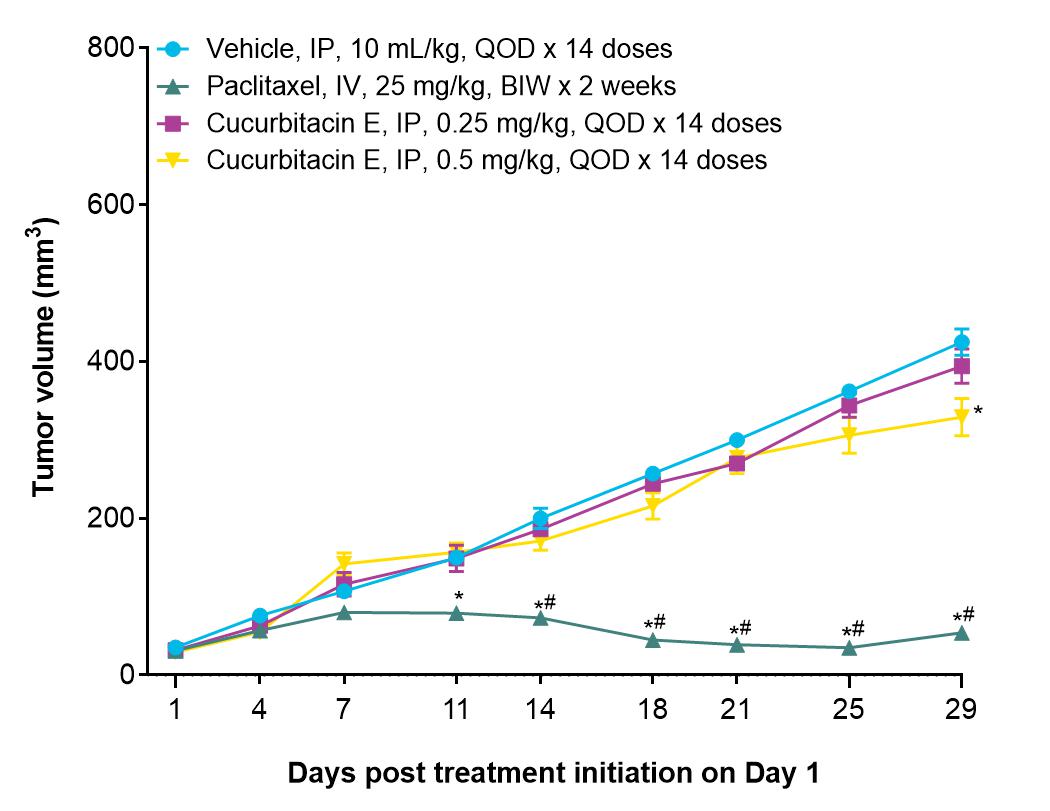
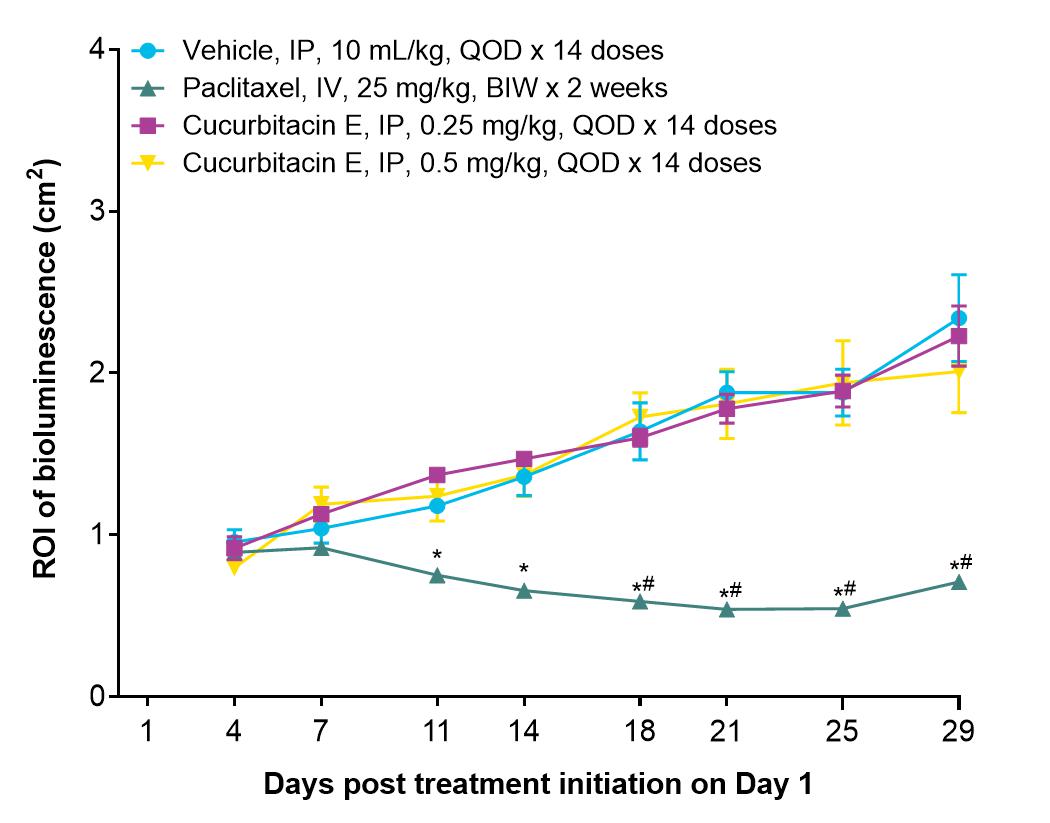
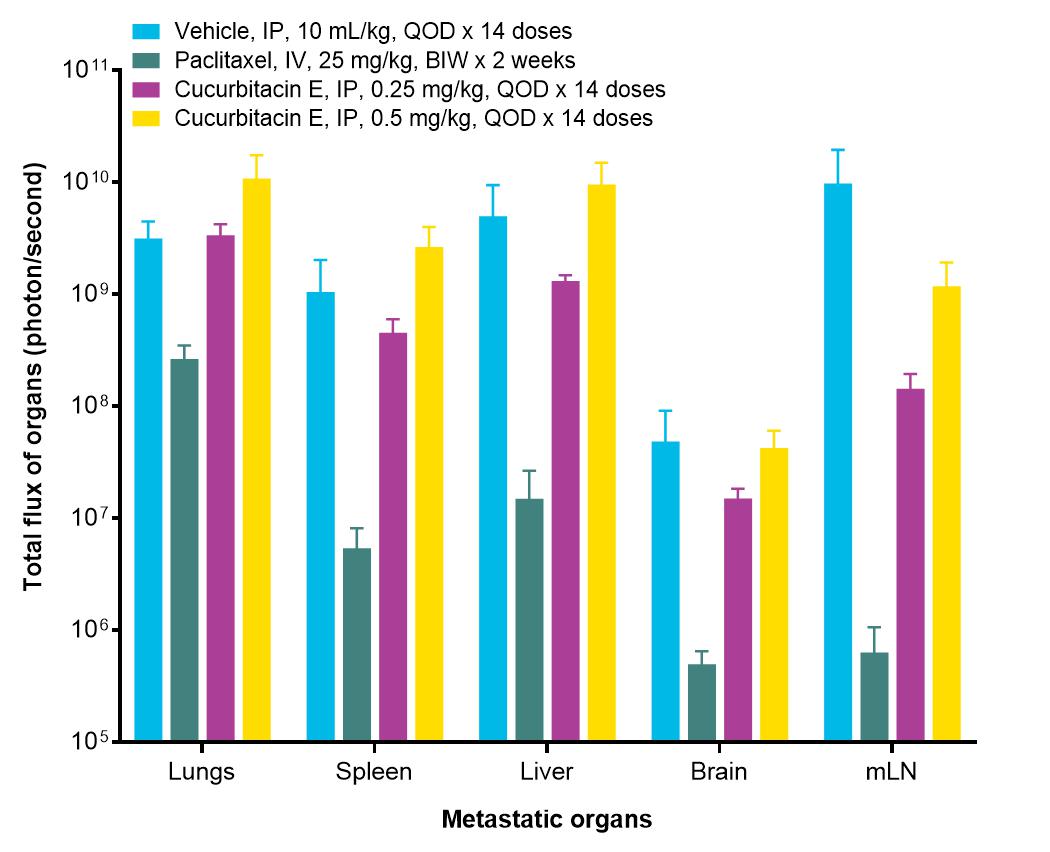
The human breast carcinoma MDA-MB-231-Luc orthotopic model is used to evaluate therapeutic efficacy of investigational antineoplastic and/or antimetastatic agent(s) in immune-compromised mice.
ORGANISM
Mouse
ASSAY INFORMATION
ASSAY TYPE
In Vivo
TESTING INFORMATION
PROCEDURE SUMMARY
Specific-pathogen-free (SPF) female NPG mice bred in an animal isolator (IVC racks) under SPF conditions at 22 ± 2°C are used. Viable luciferase labeled human breast carcinoma MDA-MB-231 cells (MDA-MB-231-Luc), at 2 x 10⁶ cells per mouse with Matrigel, are injected orthotopically into the mammary fat pad of each experimental animal. Dose administrations are initiated when grouped mean tumor growth reaches 70-120 mm³, approximately 16-20 days post-tumor implantation (total flux between 1-5E9 photons per second). Tumor growth and body weights are measured and recorded twice weekly over the course of the study period. Study period can be up to 4 weeks, or when the tumor volume reaches 1000 mm³ by caliper. Bioluminescence imaging will be conducted biweekly until study completion. Regions of interest encompassing the intracranial area of a signal will be defined using IVIS Spectrum, and the total number of photons per minute [counts/min (cpm)] will be recorded. The study period can be tailored to meet therapeutic needs.
CRITERIA FOR SIGNIFICANCE
A %T/C value ≤ 42% or significant difference (p < 0.05) in tumor volume.
TURNAROUND TIME
STANDARD
60 Days
CLINICAL RELEVANCE
THERAPEUTIC AREA
Oncology/Immuno-Oncology
ADDITIONAL INFORMATION
BRAND
PDS
TESTING LOCATION
Taiwan - Taipei
OTHER INFORMATION
We will readily accommodate client-specified alterations. These studies are performed at our AAALAC accredited laboratory in Taipei, Taiwan. All aspects of this work are performed in general accordance with the Guide for the Care and Use of laboratory animals (National Academy Press, Washington, DC, 2011). The study protocol was approved by the Pharmacology Discovery Services IACUC and is performed with the oversight of veterinarians to assure the humane treatment of laboratory animals.
ITEM DOES NOT EXIST
© Copyright 2026, Pharmacology Discovery Services – Privacy Policy | Cookie Notice | Cookie Preferences