
Vascular Permeability (Miles Assay), VEGF
CONTACT CUSTOMER SERVICE
ADD TO FAVORITES
ADD TO PANEL
OVERVIEW
DOCUMENTS/REFERENCES
BIOLOGICAL INFORMATION
BACKGROUND INFORMATION
Receptors that are transmembrane tyrosine protein kinases include those receptors for VEGF, EGF, bFGF, PDGF, etc. VEGF receptors are expressed predominantly on arterial, venules and lymphatic endothelium as well as some tumors and cells. VEGF receptor agonism may be beneficial in the treatment of ischemic heart, peripheral vascular disease and wound healing, but may increase vascular permeability as well as facilitate tumor development and metastases. Receptor antagonism may be useful in the treatment of various tumors, endometriosis and brain injury.
ORGANISM
Guinea Pig
ASSAY INFORMATION
ASSAY TYPE
In Vivo
TESTING INFORMATION
PROCEDURE SUMMARY
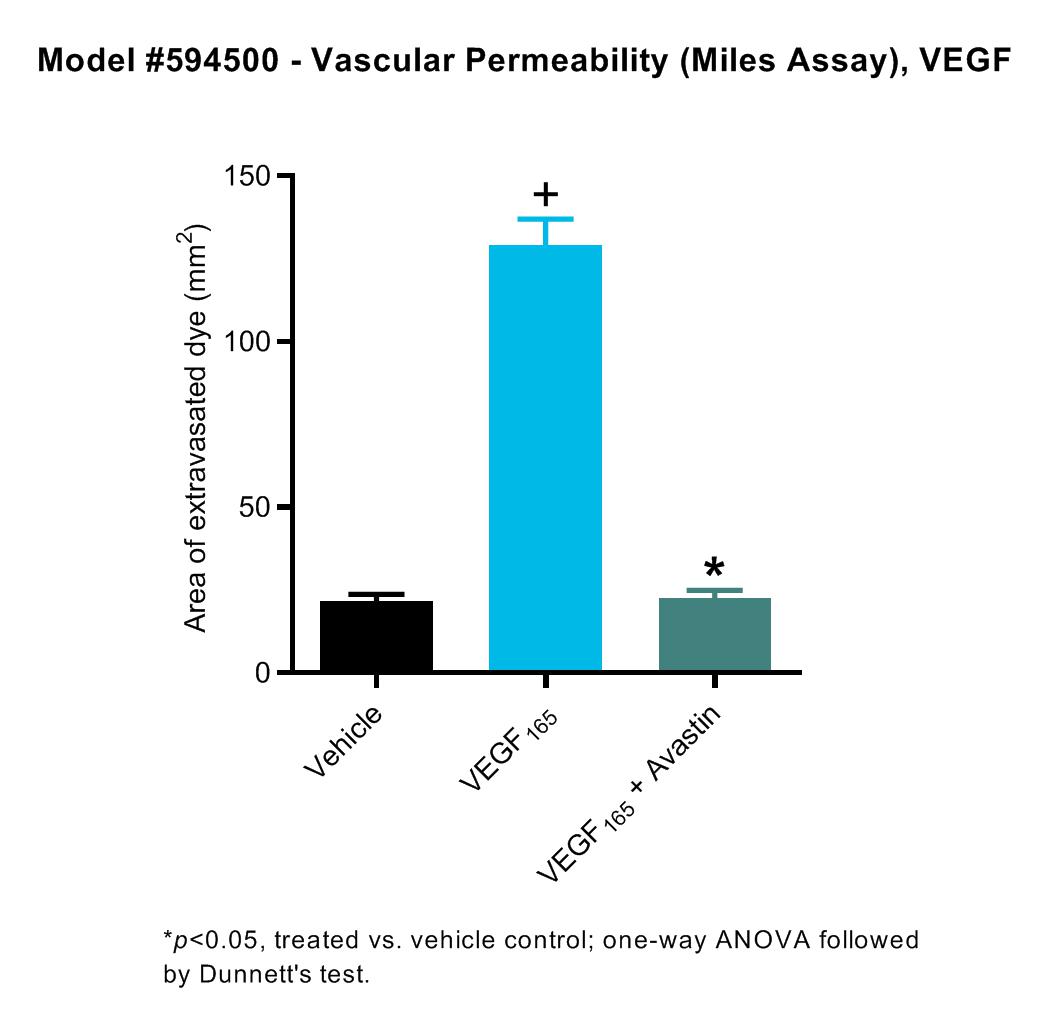
Groups of 4 male or female Guinea pigs weighing 350 ± 50 g are used. Before testing, the shoulder and back region of each animal is shaved. The animals then receive intravenous injection (via ear vein) of 1 mL of 1% Evans Blue dye. Thirty minutes later, 20 ng of VEGF165 in the presence or absence of vehicle or test article premixed for 30 minutes is injected intradermally (100 μL/site) on the pre-shaved dorsum into a grid pattern. Each dose is injected twice intradermally forming a 3 x 4 grid for each guinea pig. Thirty minutes after injections are made, animals are euthanized by carbon dioxide exsanguination and the skins containing the grid pattern are harvested. The areas of Evans Blue dye leakage around the injection sites are traced onto clear plastic sheets and are quantified by use of an Image Analyzer. Suggested Testing: n=4/group (study design dependent). Doses may be administered ID.
CRITERIA FOR SIGNIFICANCE
p<0.05 compared to vehicle control is considered significant activity
TURNAROUND TIME
STANDARD
20 Days
CLINICAL RELEVANCE
THERAPEUTIC AREA
Inflammation/Allergy
ADDITIONAL INFORMATION
BRAND
PDS
TESTING LOCATION
Taiwan - Taipei
OTHER INFORMATION
We will readily accommodate client-specified alterations. These studies are performed at our AAALAC accredited BSL-2 laboratory in Taipei, Taiwan. All aspects of this work are performed in general accordance with the Guide for the Care and Use of laboratory animals (National Academy Press, Washington, DC, 2011). The study protocol was approved by the Pharmacology Discovery Services IACUC and is performed with the oversight of veterinarians to assure the humane treatment of laboratory animals.
ITEM DOES NOT EXIST
© Copyright 2026, Pharmacology Discovery Services – Privacy Policy | Cookie Notice | Cookie Preferences