
Septic Shock, Cecal Ligation and Puncture
CONTACT CUSTOMER SERVICE
ADD TO FAVORITES
ADD TO PANEL
OVERVIEW
DOCUMENTS/REFERENCES
BIOLOGICAL INFORMATION
BACKGROUND INFORMATION
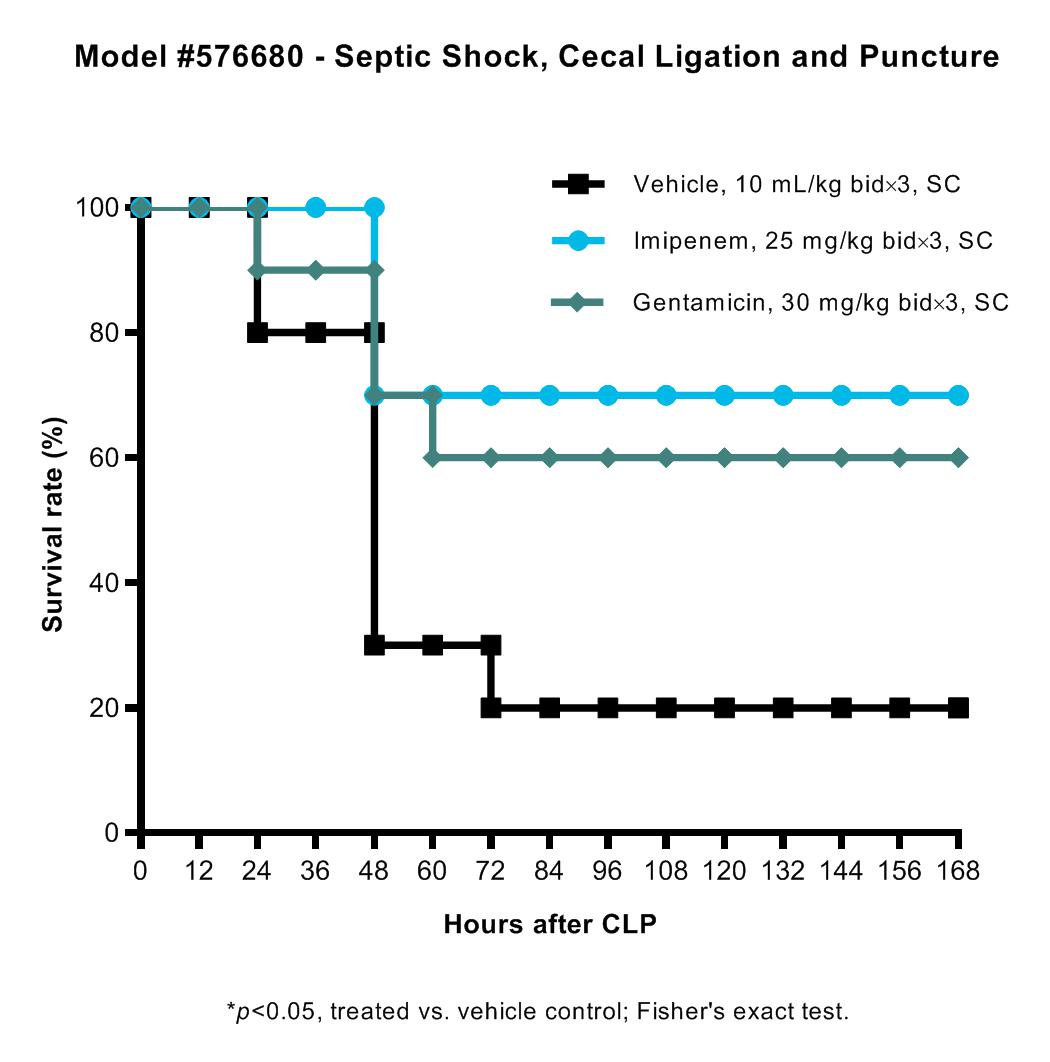
Sepsis results from a complex and dynamic pathophysiology. The cecal ligation and puncture (CLP) mouse model in sepsis research is the most widely used model for experimental sepsis. CLP-induced sepsis is commonly used to study the mechanisms of inflammation and evaluate the therapeutic efficacy.
ORGANISM
Mouse
ASSAY INFORMATION
ASSAY TYPE
In Vivo
TESTING INFORMATION
PROCEDURE SUMMARY
Groups of 10 male ICR mice weighing 32 ± 2 g are used. Mice are anesthetized with ketamine (100 mg/kg i.p.) combined with xylazine (10 mg/kg i.p.) and inject subcutaneously with 1 ml of 2.5% Dextrose/0.45% NaCl. The abdomen is shaved and swabbed with 75% alcohol, and laparotomy is then performed. The exposed cecum is ligated with 4-0 silk suture at the base below the ileocecal junction, gently puncture twice with a 21-G needle and squeeze to extrude a small amount of stool. The abdomen is then closed in two layers with 4-0 silk suture and swabbed with iodine. Mortality of the vehicle group is 70 to 100%. Vehicle and imipenem are administered subcutaneously 2 hr after surgery and twice per day for 3 days. Mortality is recorded twice a day during the following 6 days. Suggested Testing: n=10/group (study design dependent). Doses may be administered TOP, PO, IV, IP and SC. Additional analyses that can be requested include cell populations by FACS, biomarker analysis (protein and/or mRNA) and histopathology etc.
CRITERIA FOR SIGNIFICANCE
p<0.05 compared to vehicle control is considered significant activity
TURNAROUND TIME
STANDARD
20 Days
CLINICAL RELEVANCE
THERAPEUTIC AREA
Inflammation/Allergy
ADDITIONAL INFORMATION
BRAND
PDS
TESTING LOCATION
Taiwan - Taipei
OTHER INFORMATION
We will readily accommodate client-specified alterations. These studies are performed at our AAALAC accredited BSL-2 laboratory in Taipei, Taiwan. All aspects of this work are performed in general accordance with the Guide for the Care and Use of laboratory animals (National Academy Press, Washington, DC, 2011). The study protocol was approved by the Pharmacology Discovery Services IACUC and is performed with the oversight of veterinarians to assure the humane treatment of laboratory animals.
ITEM DOES NOT EXIST
© Copyright 2026, Pharmacology Discovery Services – Privacy Policy | Cookie Notice | Cookie Preferences