
Pseudomonas aeruginosa Carbapenem Resistant (LES-431), Lung Infection Model, CFU Data
CONTACT CUSTOMER SERVICE
ADD TO FAVORITES
ADD TO PANEL
OVERVIEW
DOCUMENTS/REFERENCES
BIOLOGICAL INFORMATION
BACKGROUND INFORMATION
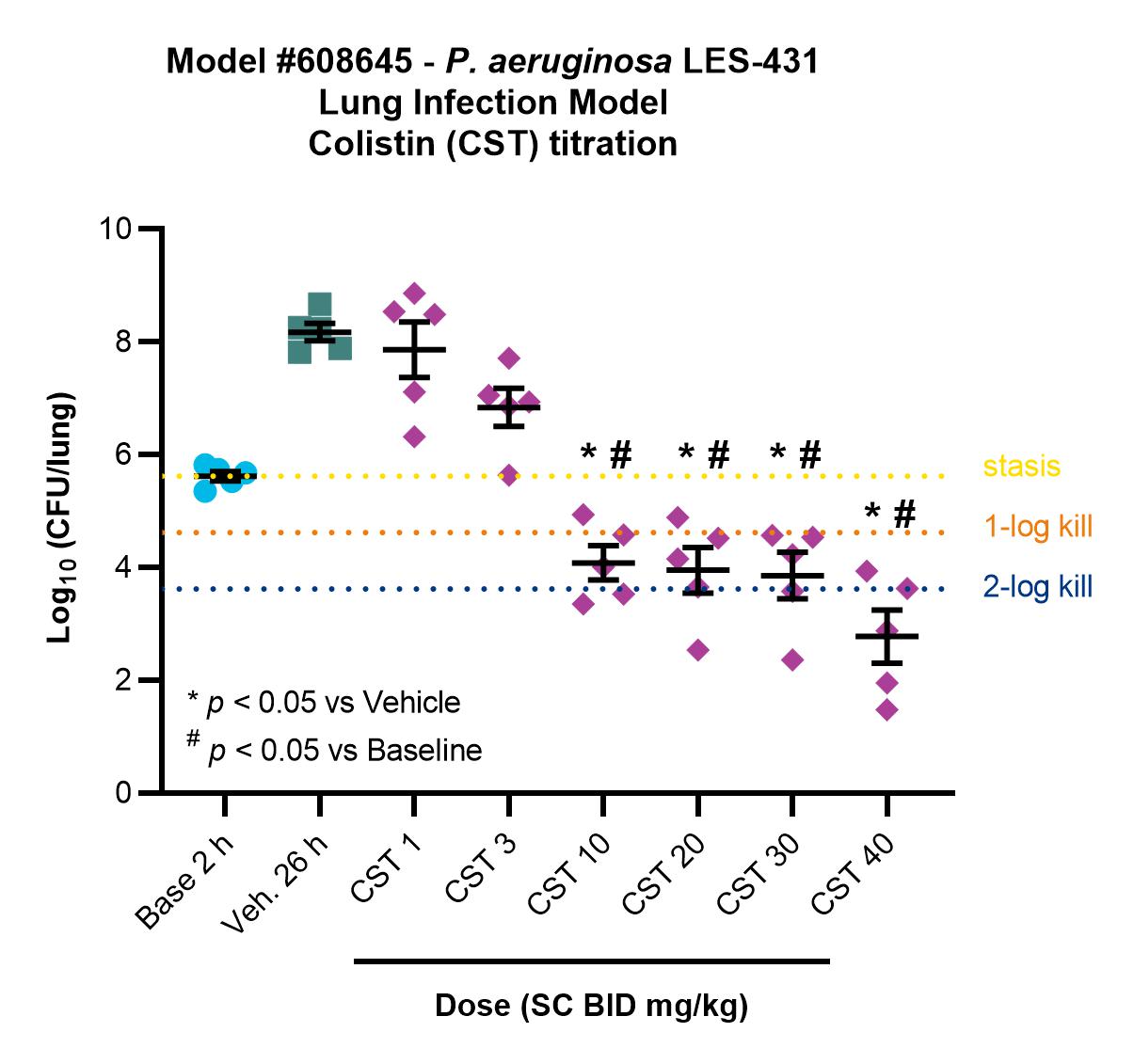
This assay assesses the antimicrobial efficacy of test articles in a lung infection model with a carbapenem resistant strain. The microbial counts in tissue are measured. This model is performed with a carbapenem resistant P. aeruginosa strain. The organism is a Liverpool epidemic strain (LES) and is a lung isolate from the parent of a cystic fibrosis patient (P Salunkhe JB 2005 PMCID: PMC1169510). It is resistant to imipenem, aztreonam, ceftazidime, piperacillin/tazobactam, amikacin, gentamicin, and ciprofloxacin (intermediate). The mechanism for carbapenem resistance is not fully understood and may be due to increased expression of AmpC and a defect in OprD (P Salunkhe JB 2005 PMCID: PMC1169510).
SPECIES
Pseudomonas aeruginosa
ORGANISM
Gram-negative Bacteria
INCUBATION CONDITIONS
Aerobic
ASSAY INFORMATION
ASSAY TYPE
In Vivo
TESTING INFORMATION
PROCEDURE SUMMARY
Groups of 5 female specific-pathogen-free ICR (CD-1) neutropenic mice are intranasally inoculated with pathogen suspension. Test articles and vehicle are administered per the specification of the study design after inoculation. Doses may be delivered by IV, IV infusion, SC, PO, IM, or IP administration. At 24 hours after the first treatment, animals are humanely euthanized and tissue is aseptically harvested. The collected tissues are homogenized and pathogen counts are determined by agar plating.
CRITERIA FOR SIGNIFICANCE
A significant (p < 0.05) decrease in the bacterial counts of the treated animals compared to the vehicle control group or the baseline control group was considered a significant difference.
TURNAROUND TIME
STANDARD
30 Days
CLINICAL RELEVANCE
THERAPEUTIC AREA
Infectious Disease
ADDITIONAL INFORMATION
BRAND
PDS
TESTING LOCATION
Taiwan - Taipei
OTHER INFORMATION
We will readily accommodate client-specified alterations. These studies are performed at our AAALAC accredited BSL-2 laboratory in Taipei, Taiwan. All aspects of this work are performed in general accordance with the Guide for the Care and Use of laboratory animals (National Academy Press, Washington, DC, 2011). The study protocol was approved by the Pharmacology Discovery Services IACUC and is performed with the oversight of veterinarians to assure the humane treatment of laboratory animals.
ITEM DOES NOT EXIST
© Copyright 2026, Pharmacology Discovery Services – Privacy Policy | Cookie Notice | Cookie Preferences