
Pancreatitis, Caerulein-Induced, Chronic
CONTACT CUSTOMER SERVICE
ADD TO FAVORITES
ADD TO PANEL
OVERVIEW
DOCUMENTS/REFERENCES
BIOLOGICAL INFORMATION
BACKGROUND INFORMATION
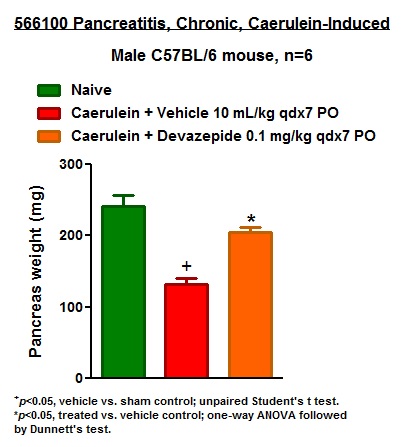
Caerulein-induced pancreatitis in mice is a well-studied model of the gastrointestinal disorders, including acute pancreatitis and chronic pancreatitis. The initiation of this disorder is mediated by activation of a cascade of digestive zymogens that results in acinar cell necrosis and pancreatic oedema followed by an inflammatory response. The caerulein-induced pancreatitis is a useful mouse model to be used in examining mechanisms of pathogenesis of pancreatitis, and assessing therapeutic or prophylactic efficacy of drug candidates.
ORGANISM
Mouse
ASSAY INFORMATION
ASSAY TYPE
In Vivo
TESTING INFORMATION
PROCEDURE SUMMARY
Test article is administered by oral gavage (PO) to a group of 6 male ICR mice weighing 22 ± 2 g. After 24 hours and overnight fasting, serum obtained from each animal is assayed for total cholesterol (T-CHO), low density lipoprotein (LDL), high density lipoprotein (HDL) and triglyceride (TG) by automated biochemical analyzer TBA-120FR. Additional analyses that can be requested include biomarkers (protein and/or mRNA) and histopathology etc. Suggested Testing: n=6/group (study design dependent). Doses may be administered PO, IV, IP and SC.
CRITERIA FOR SIGNIFICANCE
p<0.05 compared to vehicle control is considered significant activity
TURNAROUND TIME
STANDARD
40 Days
CLINICAL RELEVANCE
THERAPEUTIC AREA
Inflammation/Allergy
ADDITIONAL INFORMATION
BRAND
PDS
TESTING LOCATION
Taiwan - Taipei
OTHER INFORMATION
We will readily accommodate client-specified alterations. These studies are performed at our AAALAC accredited BSL-2 laboratory in Taipei, Taiwan. All aspects of this work are performed in general accordance with the Guide for the Care and Use of laboratory animals (National Academy Press, Washington, DC, 2011). The study protocol was approved by the Pharmacology Discovery Services IACUC and is performed with the oversight of veterinarians to assure the humane treatment of laboratory animals.
ITEM DOES NOT EXIST
© Copyright 2026, Pharmacology Discovery Services – Privacy Policy | Cookie Notice | Cookie Preferences