
Metabolic Dysfunction-Associated Steatohepatitis (MASH), CDAHFD-Induced, Humanized Liver Chimeric Mouse
CONTACT CUSTOMER SERVICE
ADD TO FAVORITES
ADD TO PANEL
OVERVIEW
DOCUMENTS/REFERENCES
BIOLOGICAL INFORMATION
BACKGROUND INFORMATION
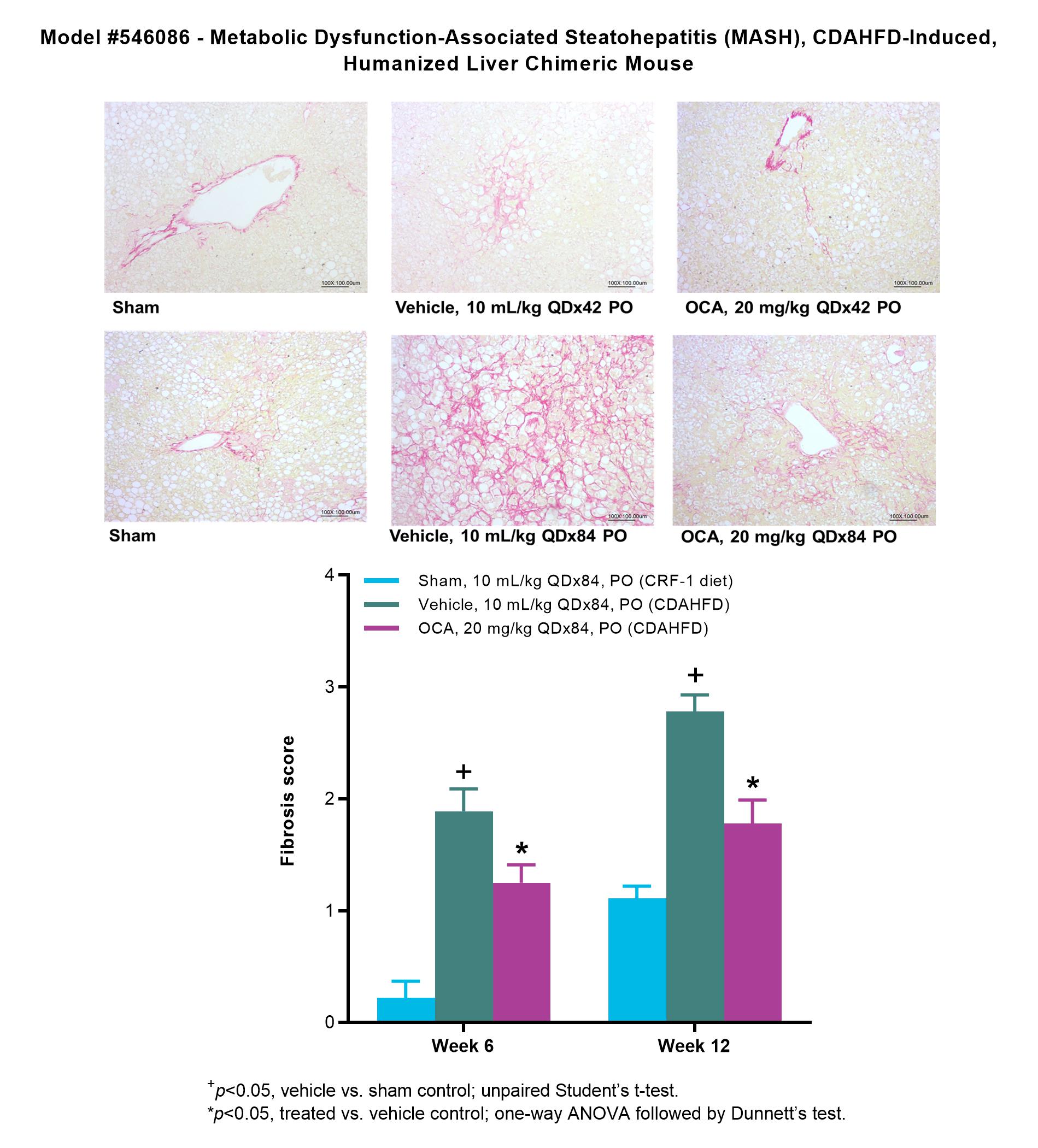
Metabolic dysfunction-associated steatohepatitis (MASH) is a type of metabolic dysfunction-associated steatotic liver disease (MASLD). Feeding mice with a choline-deficient, amino acid-defined high-fat diet (CDAHFD) is a widely used MASH model that induces aminotransferase elevation and hepatic histological changes. PXB-mouse is a humanized liver chimeric mouse with a liver highly replaced by human hepatocytes (>70%) and has previously been shown to have human gene and protein expression. This novel humanized MASH model is applied to evaluate the anti-inflammatory and anti-fibrotic efficacy of test articles for hepatic inflammation and fibrosis in chimeric mice with humanized livers.
ORGANISM
Mouse
ASSAY INFORMATION
ASSAY TYPE
In Vivo
TESTING INFORMATION
PROCEDURE SUMMARY
Groups of 10 each male human liver chimeric PXB-mice at 19 to 21 weeks of age are used. Mice are stratified into groups based on the body weight and blood human albumin (h-Alb) concentration before the study. Mice are fed choline-deficient, amino acid-defined high-fat diet (CDAHFD) or control diet (CRF-1 diet) for 12 weeks. Vehicle and test articles are administered by oral gavage (PO) once daily during the 12 weeks of diet feeding. Alanine aminotransferase (ALT) and aspartate aminotransferase (AST) levels are determined for the evaluation of hepatic impairment by automated biochemical analyzer on Days 14, 28, 42, 56, 70 and 84. Blood h-Alb level and h-ALT1 level are measured by ELISA on Days 42 and 84. Body weight is recorded three times a week during the study period. At the termination of the study (Day 84), animals are sacrificed 24 hours after the final treatment and the livers are harvested and weighed. Liver-to-body weight ratio is then calculated for each animal according to the formula: Liver (g)/BW x 100. One third (1/3) of the liver is formalin-fixed for histopathology using H&E staining, Sirius Red staining and Oil Red O staining; another 1/3 portion of the liver can be snap frozen in RNAlater for mRNA analysis (optional) and the remaining 1/3 portion can be snap frozen in liquid N2 for m-CK18, h-CK18, and h-PCSK9 analyses (optional).
CRITERIA FOR SIGNIFICANCE
ANOVA and Dunnett’s test are used to ascertain difference between vehicle control and treated mice. Significance is set at p<0.05 level.
TURNAROUND TIME
STANDARD
120 Days
CLINICAL RELEVANCE
THERAPEUTIC AREA
Metabolic Diseases
ADDITIONAL INFORMATION
BRAND
PDS
TESTING LOCATION
Taiwan - Taipei
OTHER INFORMATION
We will readily accommodate client-specified alterations. These studies are performed at our AAALAC accredited BSL-2 laboratory in Taipei, Taiwan. All aspects of this work are performed in general accordance with the Guide for the Care and Use of laboratory animals (National Academy Press, Washington, DC, 2011). The study protocol was approved by the Pharmacology Discovery Services IACUC and is performed with the oversight of veterinarians to assure the humane treatment of laboratory animals.
ITEM DOES NOT EXIST
© Copyright 2026, Pharmacology Discovery Services – Privacy Policy | Cookie Notice | Cookie Preferences