
Locomotor Activity, Mouse
CONTACT CUSTOMER SERVICE
ADD TO FAVORITES
ADD TO PANEL
OVERVIEW
DOCUMENTS/REFERENCES
BIOLOGICAL INFORMATION
BACKGROUND INFORMATION
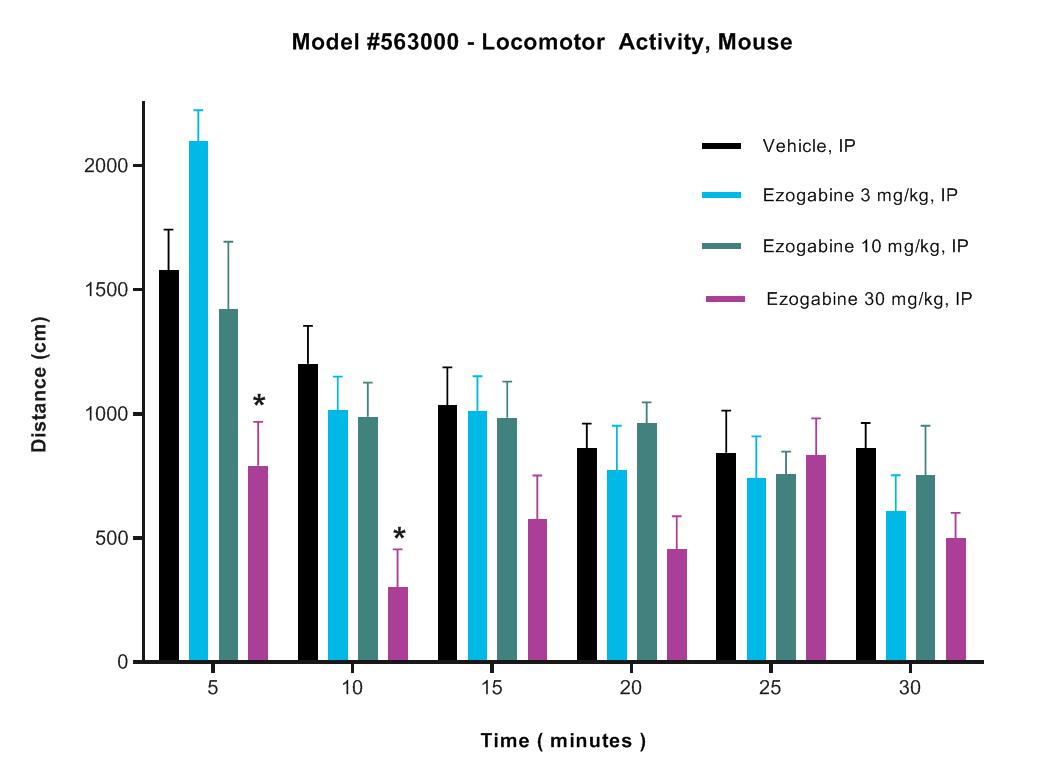
The locomotor activity test is an experiment used to assay general locomotor activity levels and potential side effects in rodents in scientific research or new drug development.
ORGANISM
Mouse
ASSAY INFORMATION
ASSAY TYPE
In Vivo
TESTING INFORMATION
PROCEDURE SUMMARY
Groups of 8 ICR mice weighing 23 ± 3 grams (g) are employed. Test compounds are administered by oral gavage (PO). The animals are placed individually into locomotor activity chambers (Columbus Instruments, USA) in a quiet, dimly illuminated room at 25℃, with no habituation prior to testing. For each 5-minute period over 30 minutes post dosing, individual motility counts (distance traveling, time spent traveling and vertical rearing) measured by interruption of infrared grids, are totaled. The mean ± SEM for each treatment group is then calculated and Dunnett’s test is applied for comparison between vehicle and treated groups. Suggested Testing: n=8/group (study design dependent). Locomotor activity assessed at an initial dose of 30 mg/kg. Dosing volume at 10 mL/kg.
CRITERIA FOR SIGNIFICANCE
Changes in locomotor activity. One-way ANOVA followed by Dunnett's test is applied for comparison between vehicle control and treated groups.
TURNAROUND TIME
STANDARD
20 Days
CLINICAL RELEVANCE
THERAPEUTIC AREA
CNS/Addiction/Pain
ADDITIONAL INFORMATION
BRAND
PDS
TESTING LOCATION
Taiwan - Taipei
OTHER INFORMATION
We will readily accommodate client-specified alterations. These studies are performed at our AAALAC accredited BSL-2 laboratory in Taipei, Taiwan. All aspects of this work are performed in general accordance with the Guide for the Care and Use of laboratory animals (National Academy Press, Washington, DC, 2011). The study protocol was approved by the Pharmacology Discovery Services IACUC and is performed with the oversight of veterinarians to assure the humane treatment of laboratory animals.
ITEM DOES NOT EXIST
© Copyright 2026, Pharmacology Discovery Services – Privacy Policy | Cookie Notice | Cookie Preferences