
Cough, Capsaicin-Induced
CONTACT CUSTOMER SERVICE
ADD TO FAVORITES
ADD TO PANEL
OVERVIEW
DOCUMENTS/REFERENCES
BIOLOGICAL INFORMATION
BACKGROUND INFORMATION
Cough is the most common presenting symptom to general practitioners. A cough results from stimulation of the cough reflex through activation of receptors primarily in the airways. While cough is predominantly a protective mechanism, recurrent or persistent cough can be harmful and may result in airway trauma, cough syncope, rib fractures, urinary incontinence, hernias, back pain, etc. Reduction of non-productive cough may, therefore, be of benefit in prevention and treatment of the above.
ORGANISM
Guinea Pig
ASSAY INFORMATION
ASSAY TYPE
In Vivo
TESTING INFORMATION
PROCEDURE SUMMARY
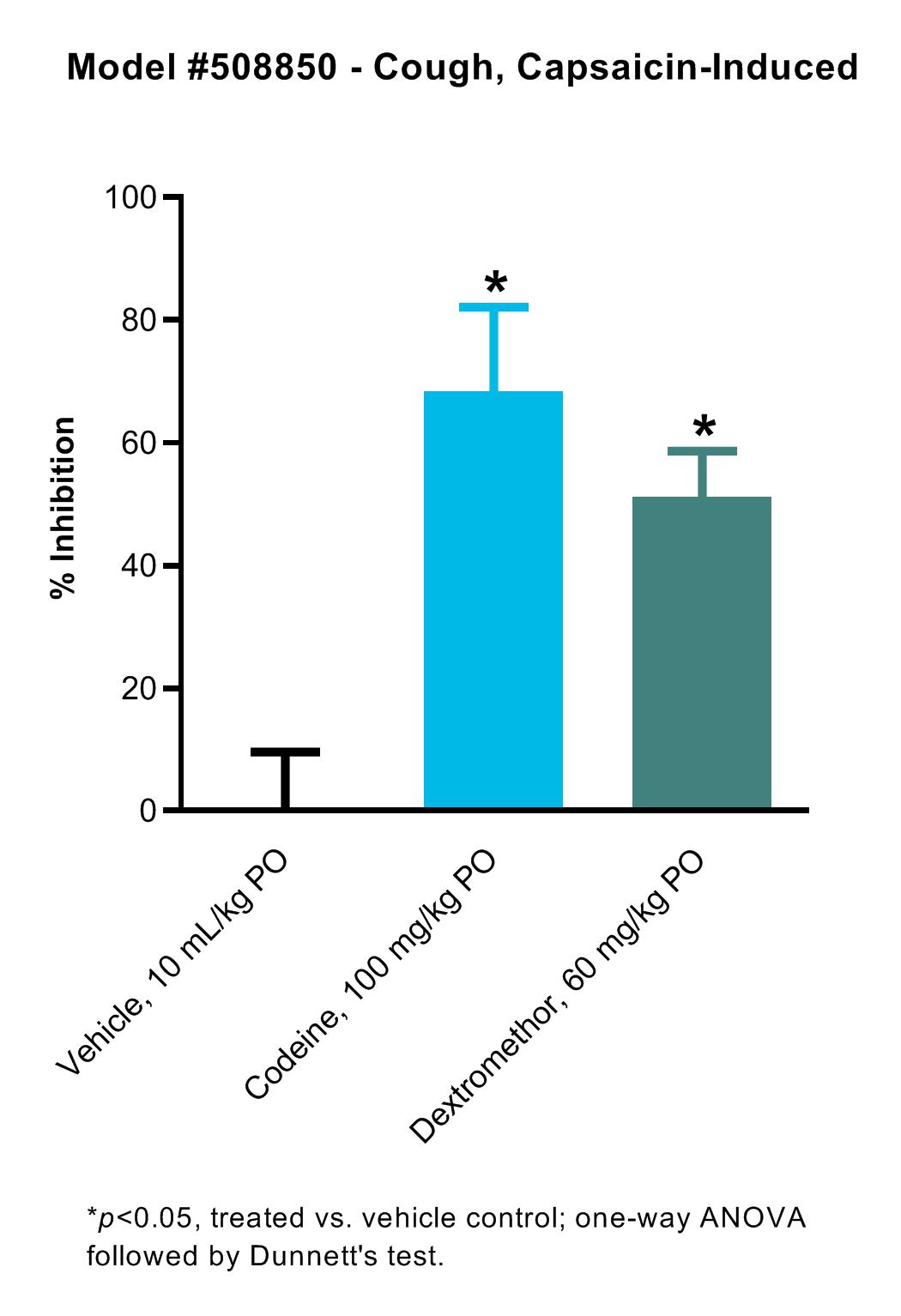
Groups of 8 male or female Dunkin-Hartley guinea pigs weighing 500 ± 50 g are used in the study. One hour after dosing, the animals are individually placed in a 4-liter sealed chamber equipped with an ultrasonic nebulizer for aerosol exposure to the cough-inducing irritant and a microphone to amplify the cough-produced sound. Test animals exposed to an aerosolized solution of capsaicin (60 μM in 10% ethanol/saline) for 15 seconds may exhibit 10-24 coughs during a subsequent 10-min period. Suggested Testing: n=8/group (study design dependent). Doses may be administered PO.
CRITERIA FOR SIGNIFICANCE
p<0.05 compared to vehicle control is considered significant activity
TURNAROUND TIME
STANDARD
60 Days
CLINICAL RELEVANCE
THERAPEUTIC AREA
Inflammation/Allergy
ADDITIONAL INFORMATION
BRAND
PDS
TESTING LOCATION
Taiwan - Taipei
OTHER INFORMATION
We will readily accommodate client-specified alterations. These studies are performed at our AAALAC accredited BSL-2 laboratory in Taipei, Taiwan. All aspects of this work are performed in general accordance with the Guide for the Care and Use of laboratory animals (National Academy Press, Washington, DC, 2011). The study protocol was approved by the Pharmacology Discovery Services IACUC and is performed with the oversight of veterinarians to assure the humane treatment of laboratory animals.
ITEM DOES NOT EXIST
© Copyright 2026, Pharmacology Discovery Services – Privacy Policy | Cookie Notice | Cookie Preferences