
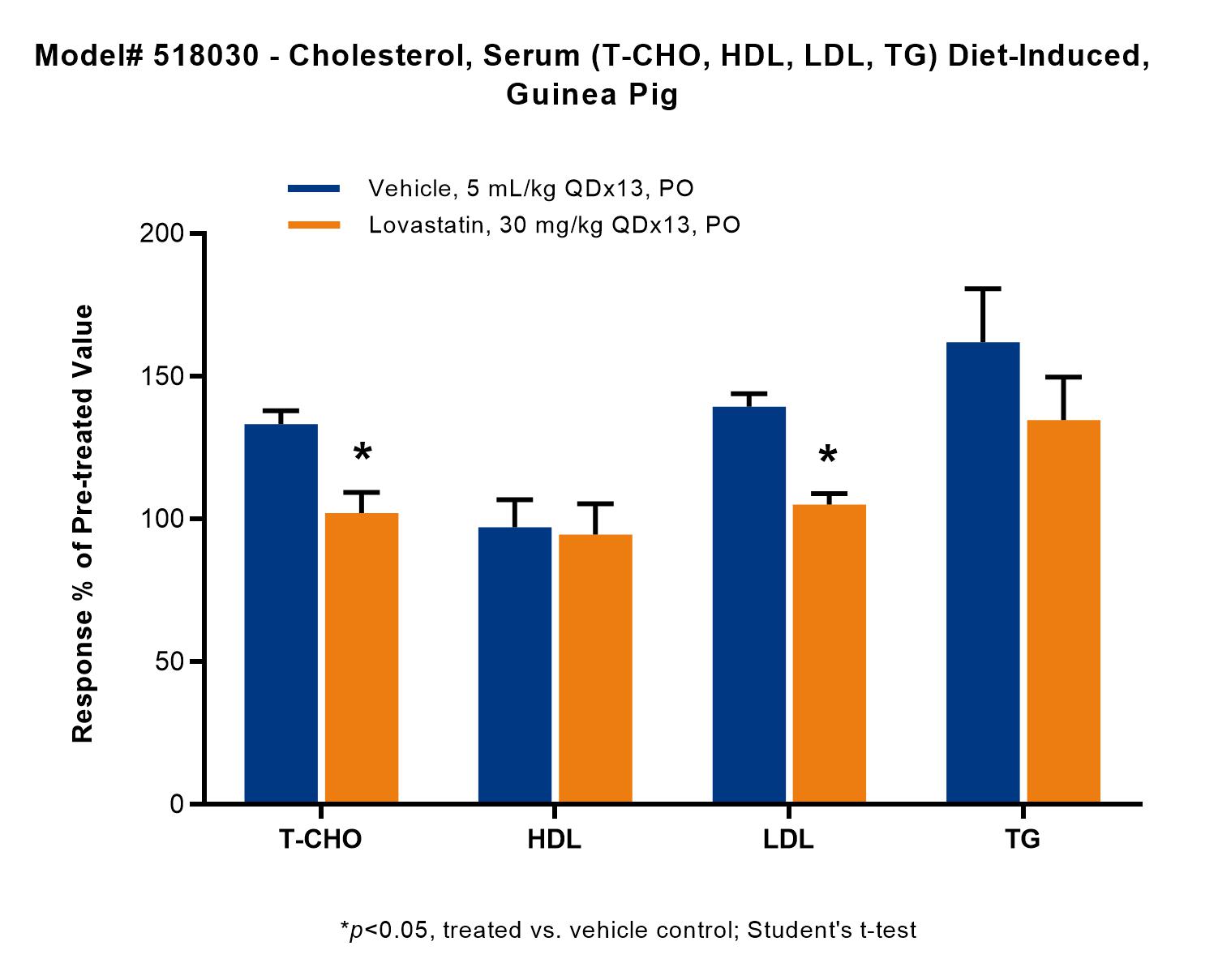
Cholesterol, Serum (Total, HDL, LDL, TG) Diet-Induced, Guinea Pig
CONTACT CUSTOMER SERVICE
ADD TO FAVORITES
ADD TO PANEL
OVERVIEW
DOCUMENTS/REFERENCES
BIOLOGICAL INFORMATION
BACKGROUND INFORMATION
Cholesterol is a lipid needed by the body for many important functions. High serum cholesterol, however, together with other fatty materials (e.g., high levels of LDL and/or low levels of HDL and/or high levels of triglycerides) can result in atherosclerotic plaque with increased risk of developing heart disease and stroke. This animal disease model is caused by a diet high in cholesterol and saturated fat or by having an inherited condition that causes elevated cholesterol levels.
ORGANISM
Guinea Pig
ASSAY INFORMATION
ASSAY TYPE
In Vivo
TESTING INFORMATION
PROCEDURE SUMMARY
Groups of 6 male guinea pigs weighing 350 ± 50 g are fed a high-fat diet (TestDiet® 5W29) (modified LabDiet® Guinea Pig Diet 5025 with 15% palm oil and 0. 1% cholesterol 0. 1) throughout the experiment. Test article and/or vehicle is administered orally (PO) once daily for 13 consecutive days one week after beginning the high-fat diet. After fasting overnight, blood samples are obtained from each animal 5 minutes before initial test article and/or vehicle administration (pre-treatment) and 24 hours after the last dosing (post-treatment). The serum total cholesterol (T-CHO), low density lipoprotein (LDL), high density lipoprotein (HDL) and triglyceride (TG) are assayed by automated biochemical analyzer TBA-120FR. Additional analyses that can be requested include biomarkers (protein and/or mRNA) and histopathology etc. Suggested Testing: n=6/group (study design dependent). Doses may be administered PO, IV, IP and SC.
CRITERIA FOR SIGNIFICANCE
p<0.05 compared to vehicle control is considered significant activity
TURNAROUND TIME
STANDARD
35 Days
CLINICAL RELEVANCE
THERAPEUTIC AREA
Metabolic Diseases
ADDITIONAL INFORMATION
BRAND
PDS
TESTING LOCATION
Taiwan - Taipei
OTHER INFORMATION
We will readily accommodate client-specified alterations. These studies are performed at our AAALAC accredited BSL-2 laboratory in Taipei, Taiwan. All aspects of this work are performed in general accordance with the Guide for the Care and Use of laboratory animals (National Academy Press, Washington, DC, 2011). The study protocol was approved by the Pharmacology Discovery Services IACUC and is performed with the oversight of veterinarians to assure the humane treatment of laboratory animals.
ITEM DOES NOT EXIST
© Copyright 2026, Pharmacology Discovery Services – Privacy Policy | Cookie Notice | Cookie Preferences