
Obesity, Diet-Induced
CONTACT CUSTOMER SERVICE
ADD TO FAVORITES
ADD TO PANEL
OVERVIEW
DOCUMENTS/REFERENCES
BIOLOGICAL INFORMATION
BACKGROUND INFORMATION
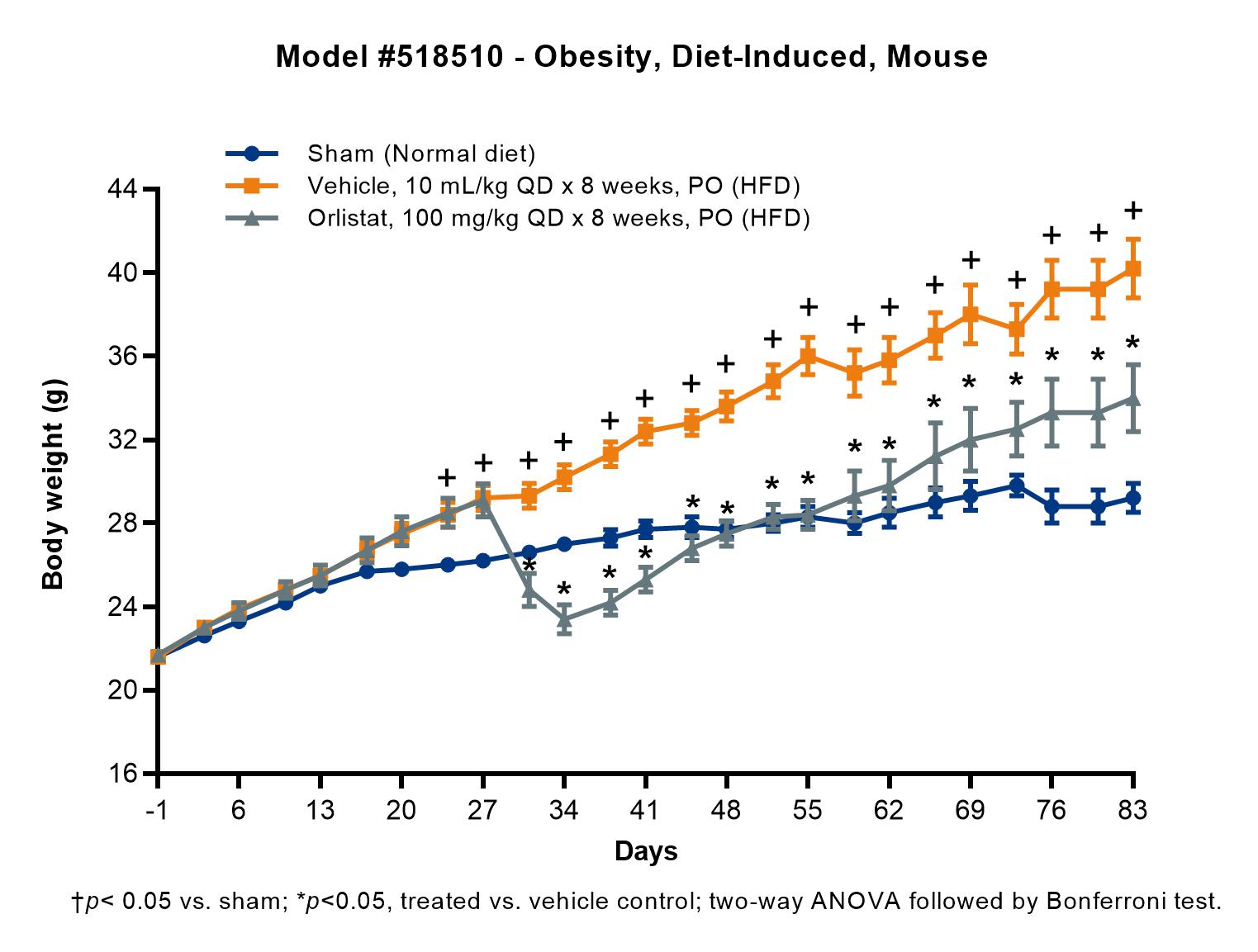
This is a diet-induced obesity (DIO) mouse model. Male C57BL/6 mice are fed a high fat diet for 8 to 12 weeks to induce obesity. Animals become obese, mildly to moderately hyperglycemic, and develop impaired glucose tolerance. This model is applied to evaluate the efficacy of test article and mechanism of obesity in mice.
ORGANISM
Mouse
ASSAY INFORMATION
ASSAY TYPE
In Vivo
TESTING INFORMATION
PROCEDURE SUMMARY
Groups of 10 male C57BL/6 mice at 4-6 weeks of age are used. Mice are fed high-fat diet (Research Diets D12492 (20% protein, 60% fat and 20% carbohydrate)) or control diet for 4 weeks. Vehicle, test articles, and positive control orlistat at 100 mg/kg are then administered by oral gavage (PO) once daily for 4 or 8 weeks during the diet feeding. Body weight is recorded twice weekly. After mice are administered for 4 or 8 weeks, animals are fasted overnight and serum total cholesterol (T-CHO), low density lipoprotein (LDL), triglyceride (TG) and glucose (GLU) levels are measured by automatic analyzer (TBA-120 FR) on Weeks 8 and/or 12. The animals are sacrificed 24 hours after the final treatment, and epididymal fat pad, inguinal fat pad and liver for each animal are harvested and weighed. Tissue-to-body weight ratio is calculated for each animal according to the formula: tissue (g)/BW x 100. Additional analyses that can be requested biomarkers (protein and/or) and histopathology etc. Suggested Testing: n=10/group (study design dependent). Doses may be administered PO, IV, IP and SC.
CRITERIA FOR SIGNIFICANCE
p<0.05 compared to vehicle control is considered significant activity
TURNAROUND TIME
STANDARD
120 Days
CLINICAL RELEVANCE
THERAPEUTIC AREA
Metabolic Diseases
ADDITIONAL INFORMATION
BRAND
PDS
TESTING LOCATION
Taiwan - Taipei
OTHER INFORMATION
We will readily accommodate client-specified alterations. These studies are performed at our AAALAC accredited BSL-2 laboratory in Taipei, Taiwan. All aspects of this work are performed in general accordance with the Guide for the Care and Use of laboratory animals (National Academy Press, Washington, DC, 2011). The study protocol was approved by the Pharmacology Discovery Services IACUC and is performed with the oversight of veterinarians to assure the humane treatment of laboratory animals.
ITEM DOES NOT EXIST
© Copyright 2026, Pharmacology Discovery Services – Privacy Policy | Cookie Notice | Cookie Preferences