
In Vitro ADME, Protein Binding, Plasma, Mouse
CONTACT CUSTOMER SERVICE
ADD TO FAVORITES
ADD TO PANEL
OVERVIEW
DOCUMENTS/REFERENCES
BIOLOGICAL INFORMATION
BACKGROUND INFORMATION
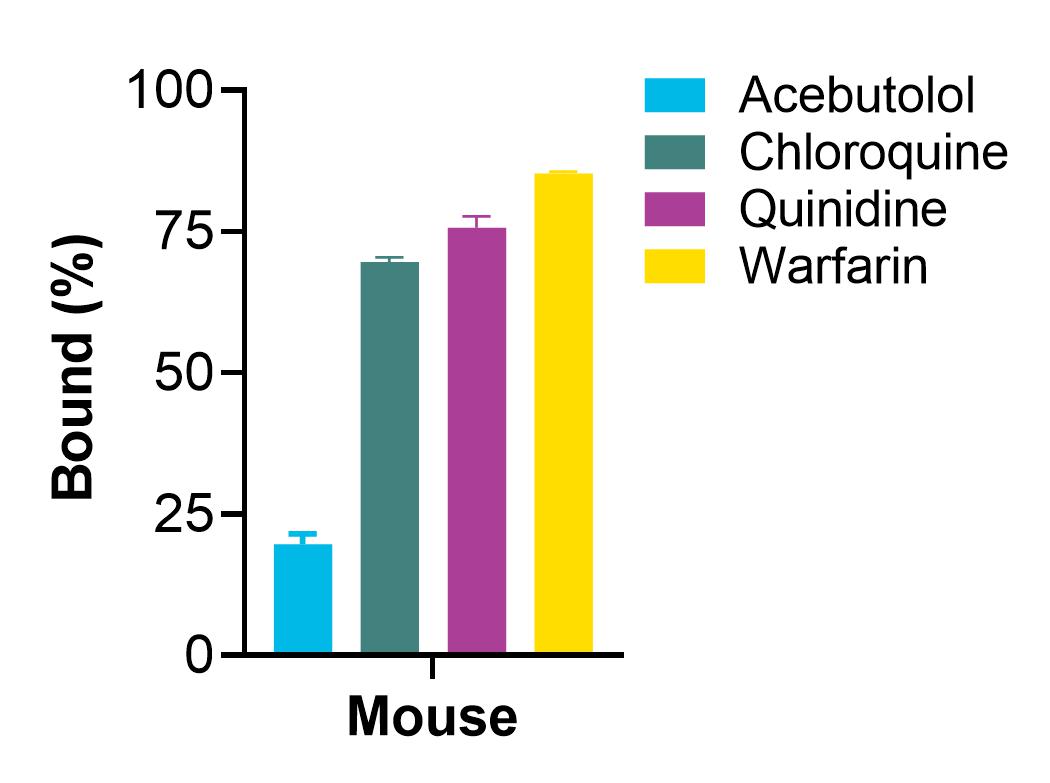
The rapid equilibrium dialysis (RED) technique is used to separate the fraction of a test compound that is unbound from the fraction that is bound to proteins. The in vitro assay is performed to evaluate the plasma protein binding rates from mouse plasma matrix.
ORGANISM
Mouse
ASSAY INFORMATION
ASSAY TYPE
Biochemical
TESTING INFORMATION
PROCEDURE SUMMARY
Mouse plasma matrix is used for in vitro plasma protein binding test. The protein matrix is spiked with the test compound at 10 µM with a final DMSO concentration of 1%. The dialysate compartment is loaded with phosphate-buffered saline (PBS, pH 7.4), and the sample side is loaded with an equal volume of the spiked protein matrix. The dialysis plate is then sealed and incubated at 37°C for 4 hours. After the incubation, samples are taken from each compartment and diluted with PBS followed by addition of acetonitrile and centrifugation. The supernatants are then used for LC-MS/MS analysis. A control sample is prepared from the spiked protein matrix in the same manner as the assay samples (without dialysis). The testing samples are performed in triplicate. The procedure can be customized based on client’s request.
TURNAROUND TIME
STANDARD
20 Days
CLINICAL RELEVANCE
THERAPEUTIC AREA
Other
ADDITIONAL INFORMATION
BRAND
PDS
TESTING LOCATION
Taiwan - Taipei
OTHER INFORMATION
We will readily accommodate client-specified alterations. These studies are performed at our AAALAC-accredited BSL-2 laboratory in Taipei, Taiwan. All aspects of this work are performed in general accordance with the Guide for the Care and Use of Laboratory Animals (National Academy Press, Washington, DC, 2013). The study protocol is approved by the Pharmacology Discovery Services IACUC and is performed with the oversight of veterinarians to assure the humane treatment of laboratory animals.
ITEM DOES NOT EXIST
© Copyright 2026, Pharmacology Discovery Services – Privacy Policy | Cookie Notice | Cookie Preferences