
Hepatic Injury, Carbon Tetrachloride (CCl4)-Induced
CONTACT CUSTOMER SERVICE
ADD TO FAVORITES
ADD TO PANEL
OVERVIEW
DOCUMENTS/REFERENCES
BIOLOGICAL INFORMATION
BACKGROUND INFORMATION
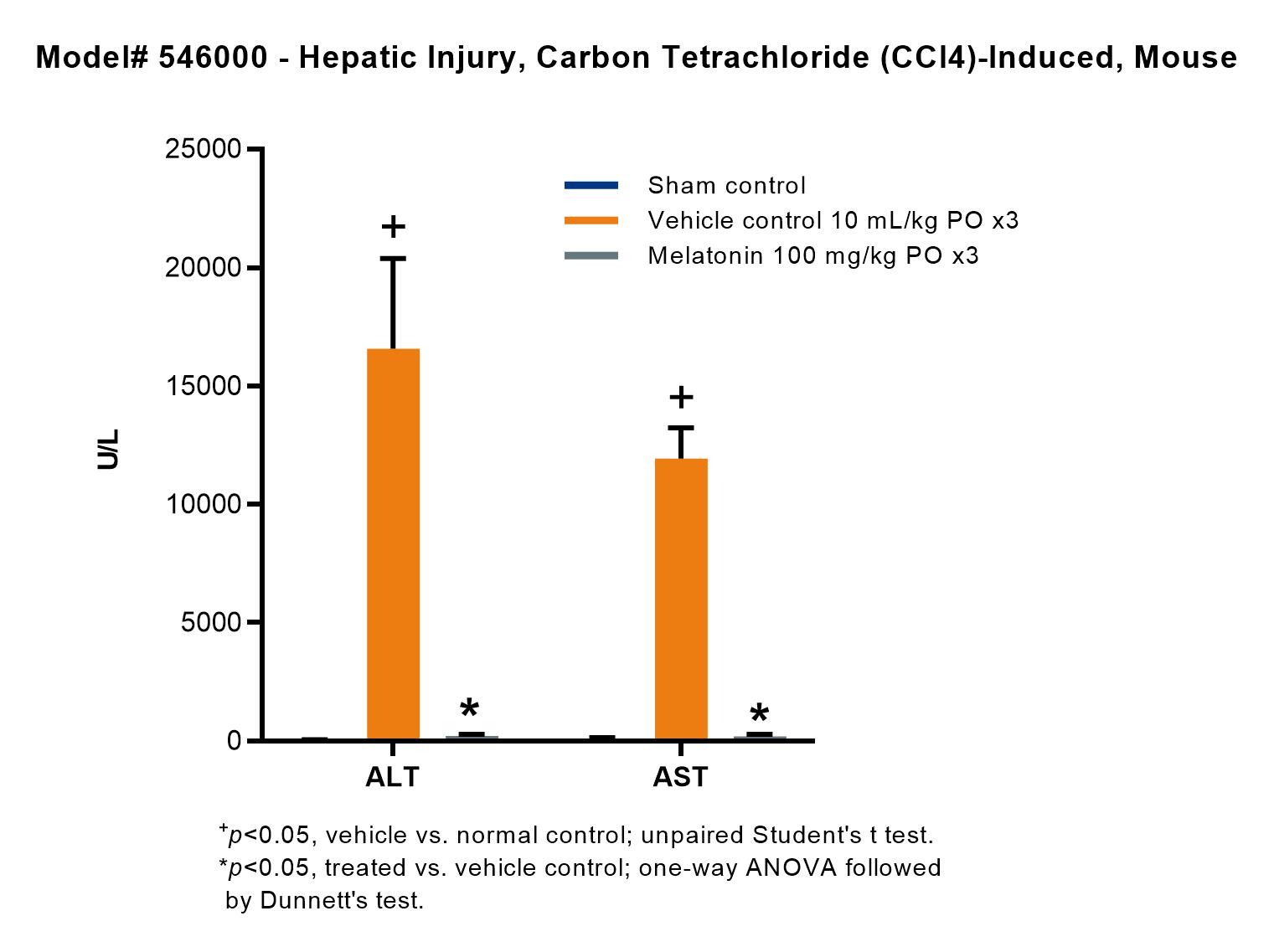
Carbon tetrachloride (CCl4) is widely used to experimentally induce liver injury in rodents. A single dose of CCl4 leads to necrosis and steatosis, while prolonged administration leads to liver fibrosis, cirrhosis, and HCC. This study is to investigate the protective effects of drug candidates on CCl4-induced acute liver injury in mice.
ORGANISM
Mouse
ASSAY INFORMATION
ASSAY TYPE
In Vivo
TESTING INFORMATION
PROCEDURE SUMMARY
Test article is administered orally (PO) to a group of 6 male C57BL/6 mice weighing 22 ± 2g at 0.5 hour before as well as at 4 and 8 hours after carbon tetrachloride (5 mL/kg, 1% CCl4 in olive oil, IP). The animals are sacrificed 24 hrs after administration of CCl4 and serum alanine aminotransferase (ALT) and aspartate aminotransferase (AST) levels are assessed by automated biochemical analyzer TBA-120FR. Additional analyses that can be requested include ALP, T-BIL and ALB levels, liver weight, biomarker analysis (protein and/or mRNA) and histopathology etc. Doses may be administered PO, IV, IP and SC. Suggested Testing: n=6/group (study design dependent).
CRITERIA FOR SIGNIFICANCE
p<0.05 compared to vehicle control is considered significant activity
TURNAROUND TIME
STANDARD
20 Days
CLINICAL RELEVANCE
THERAPEUTIC AREA
Inflammation/Allergy
ADDITIONAL INFORMATION
BRAND
PDS
TESTING LOCATION
Taiwan - Taipei
ITEM DOES NOT EXIST
© Copyright 2026, Pharmacology Discovery Services – Privacy Policy | Cookie Notice | Cookie Preferences